
About us
Borosilicate glass, inside the HARIO group since 1921
The HARIO group was founded in 1921. Borosilicate glass has been its material ever since.
HARIO SCIENCE CO., LTD. is the company in the group that supplies this glass to laboratories, distributors and OEM customers.
Our material
One glass, made inside the group
Our glass is called H‑32. Its thermal expansion is α = 32 × 10−7/K.
It is melted and drawn at the group’s own plant in Japan. We do not buy the glass from an outside supplier and then form it. The material comes first, inside the group.
This is why the composition and the dimensions stay the same, lot after lot, over programmes that run for years.
What we supply
Four things we sell
01 / LABWARE
Laboratory glassware
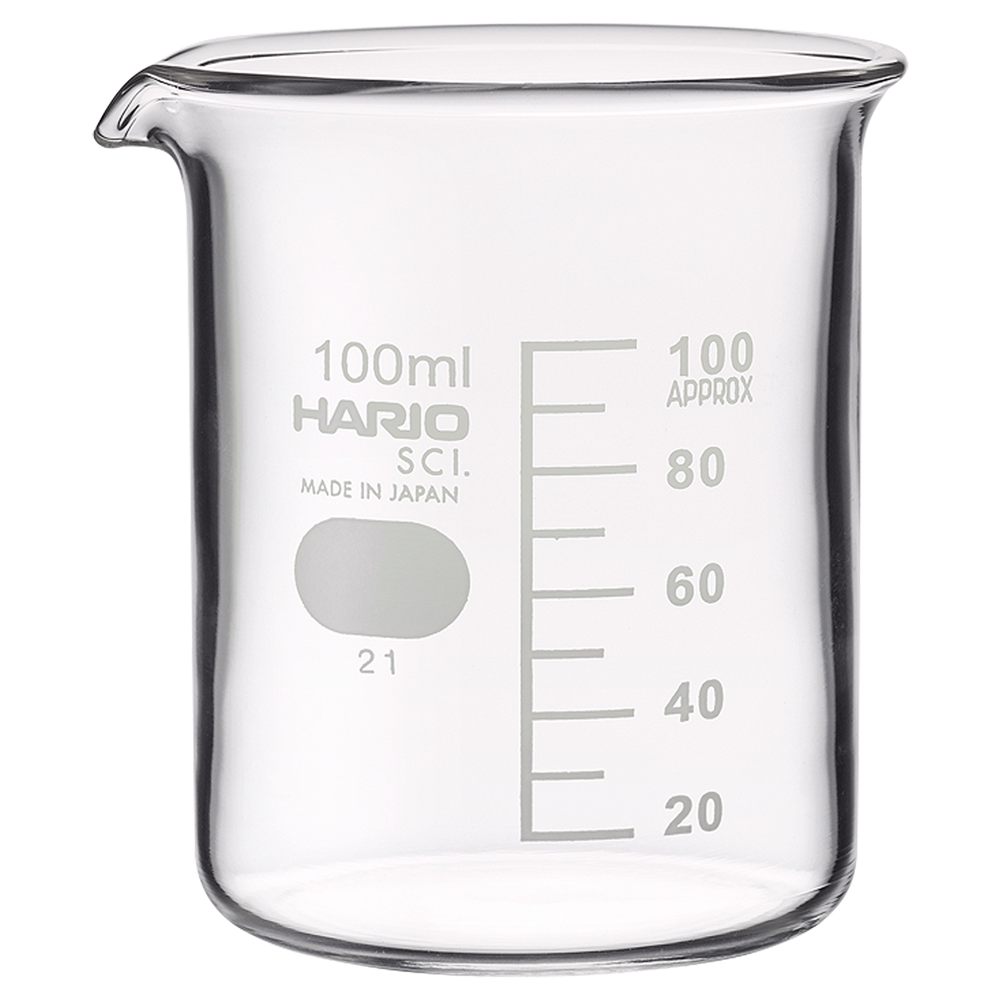
Beakers, flasks, screw‑cap bottles and separatory funnels in H‑32 borosilicate glass, supplied to laboratories and distributors.
02 / MATERIAL
Glass tubing and blanks
Drawn tubing and semi-finished pieces, supplied as raw material to processors.
03 / OEM
OEM & custom parts
Glass parts made to a customer’s drawing or specification, by machine blowing, hand blowing, hand pressing or tube drawing.
04 / CONSUMABLE
Glass fiber filter tape
A consumable for beta‑attenuation particulate monitors, supplied under our own brand.
The plant
Koga Plant, Ibaraki
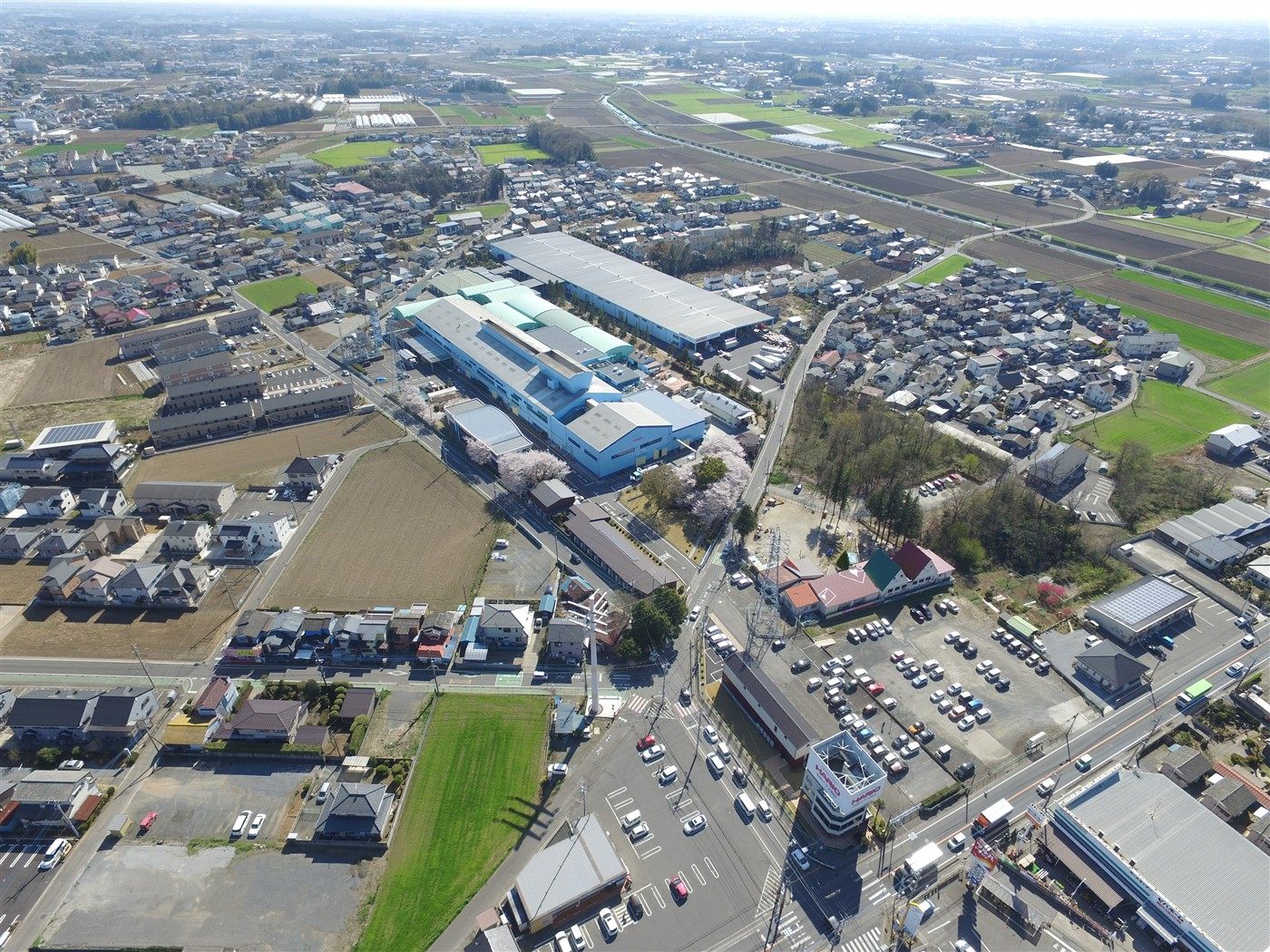
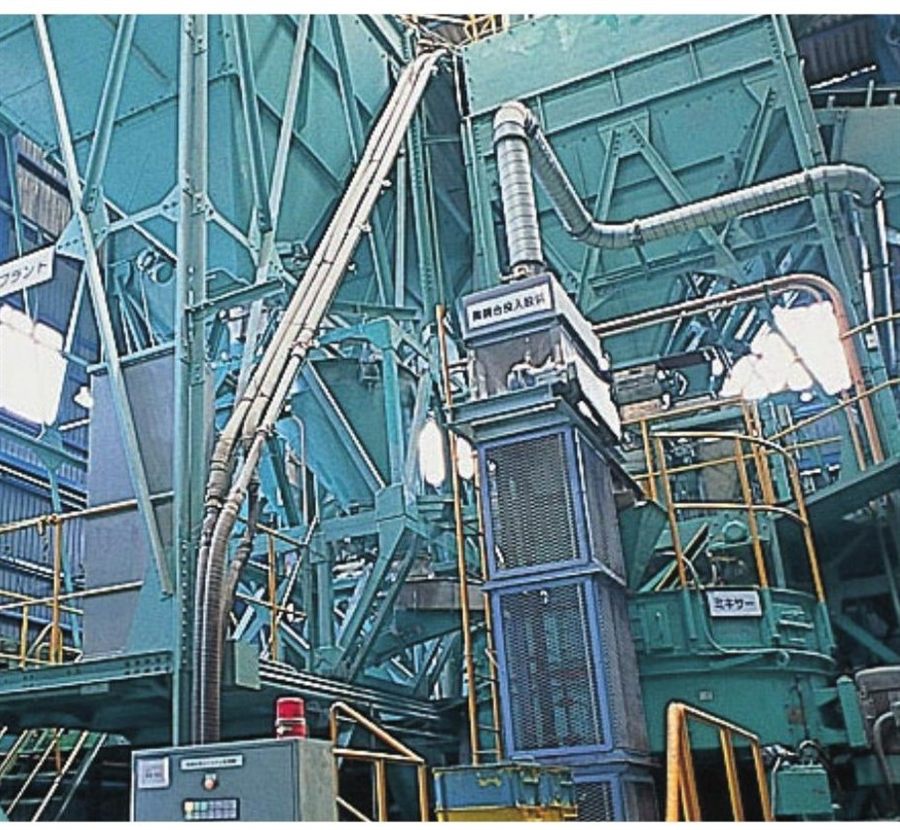
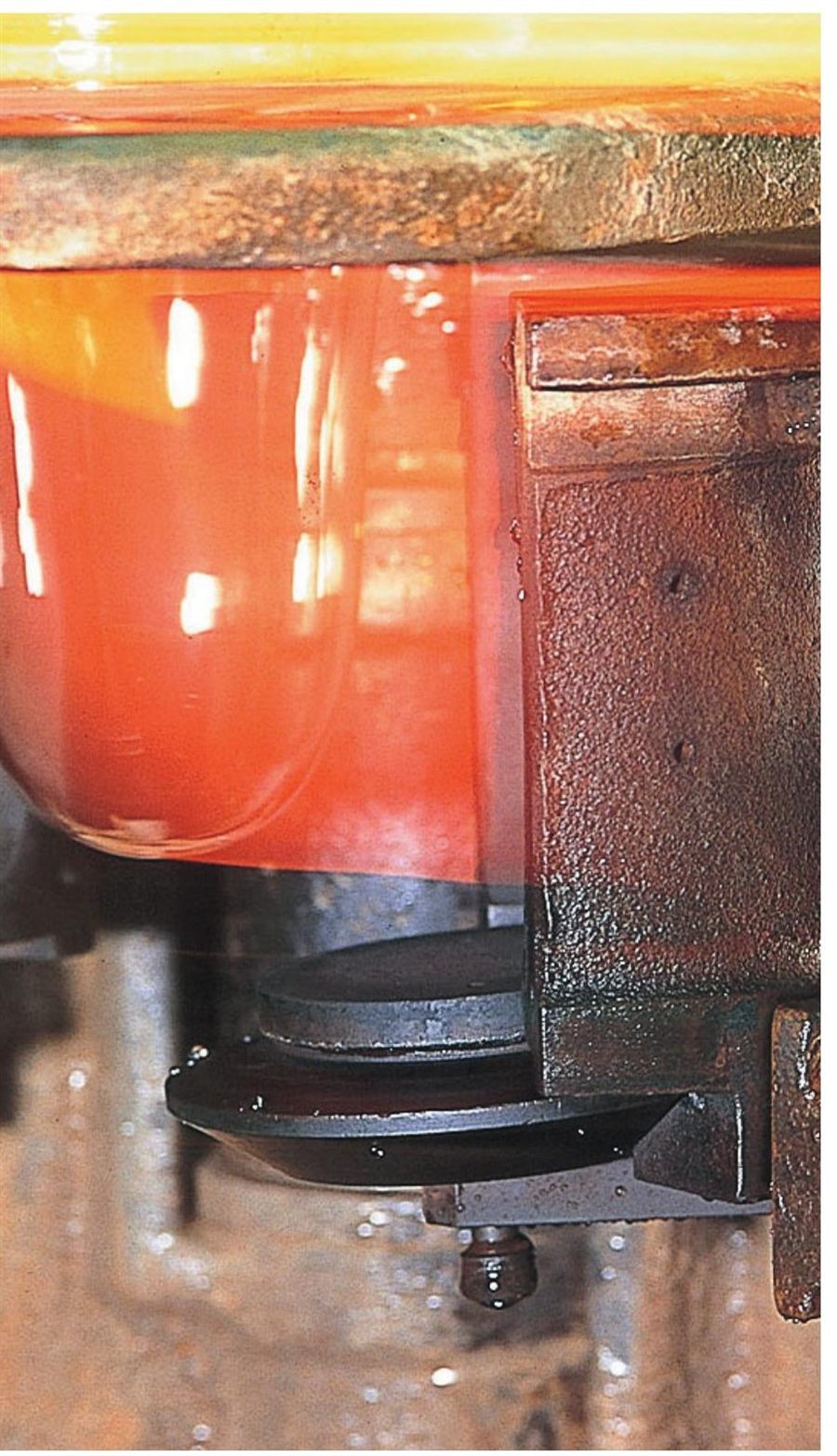
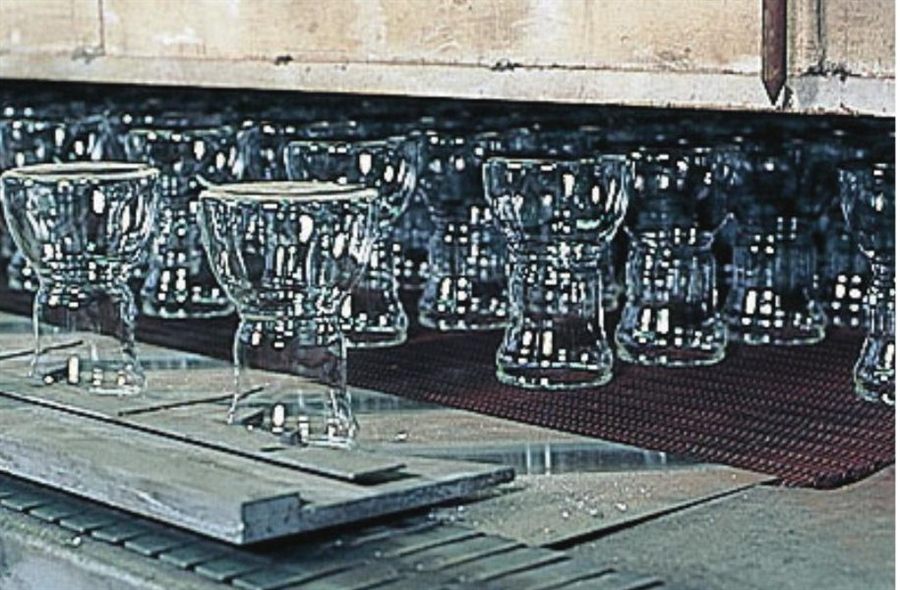
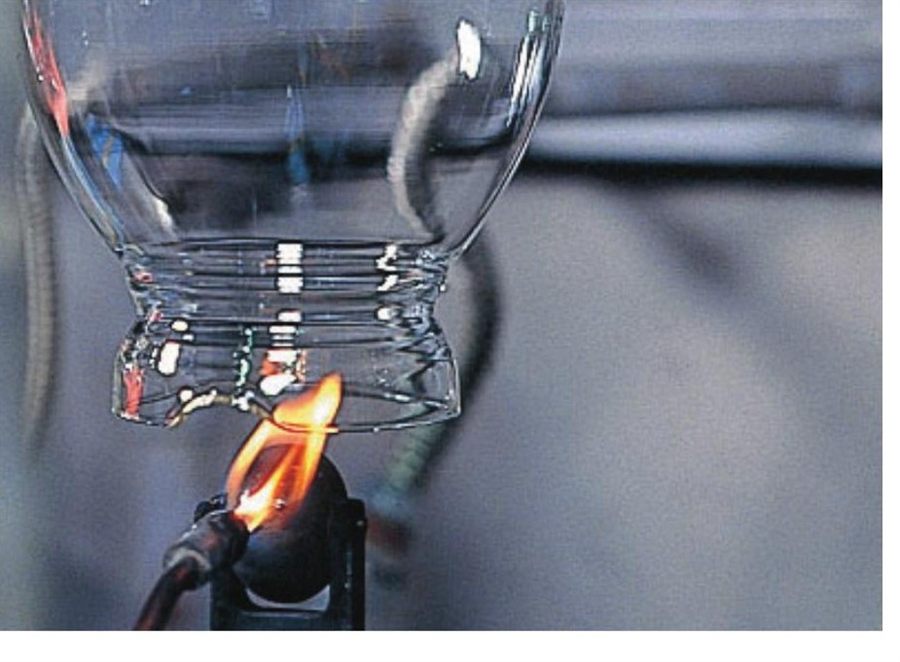
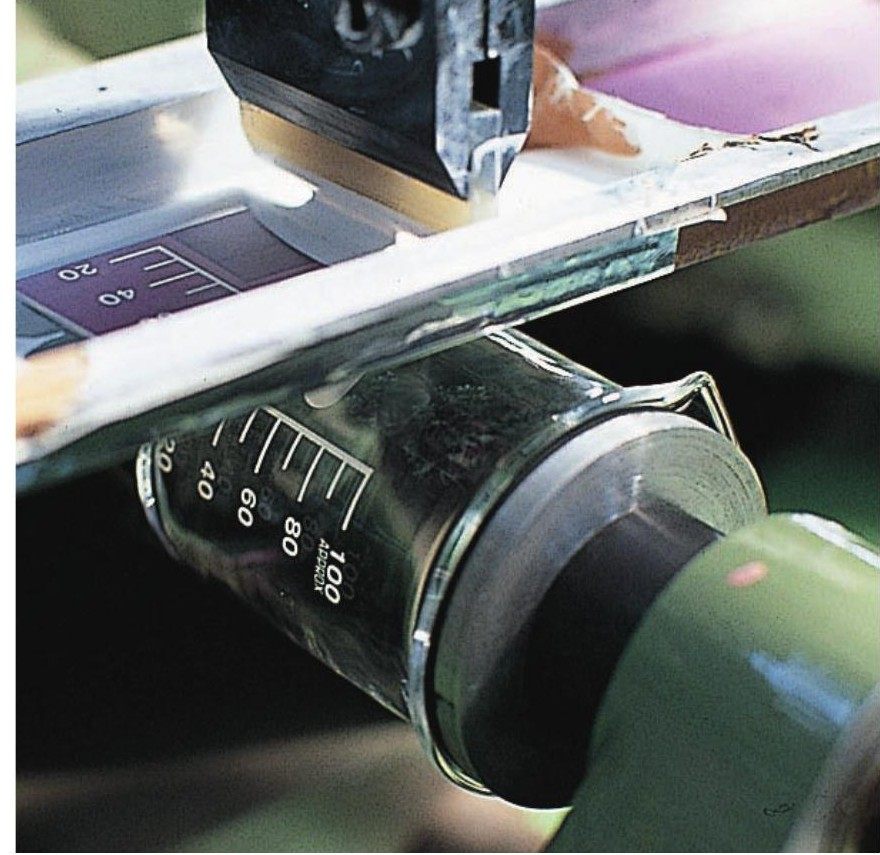
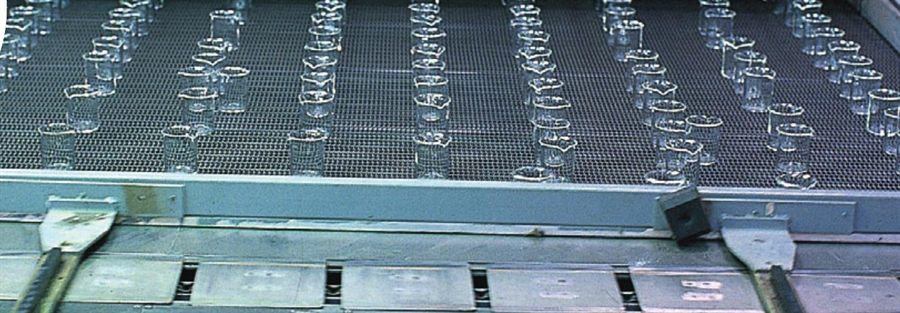
The glass is melted at the group’s plant in Koga, Ibaraki. Seven stages happen on this one site: mixing the raw materials, melting, forming, slow cooling, machining, printing and firing. Hand-forming is done here too, next to the automatic lines. No stage is sent to an outside company and returned.
This matters for two reasons. First, if there is a quality problem, we can find which stage caused it. We do not have to ask several suppliers whose fault it was. Second, when a specification changes, we change it in one place instead of passing it along a chain of companies.
How the glass is melted
A glass plant without a chimney
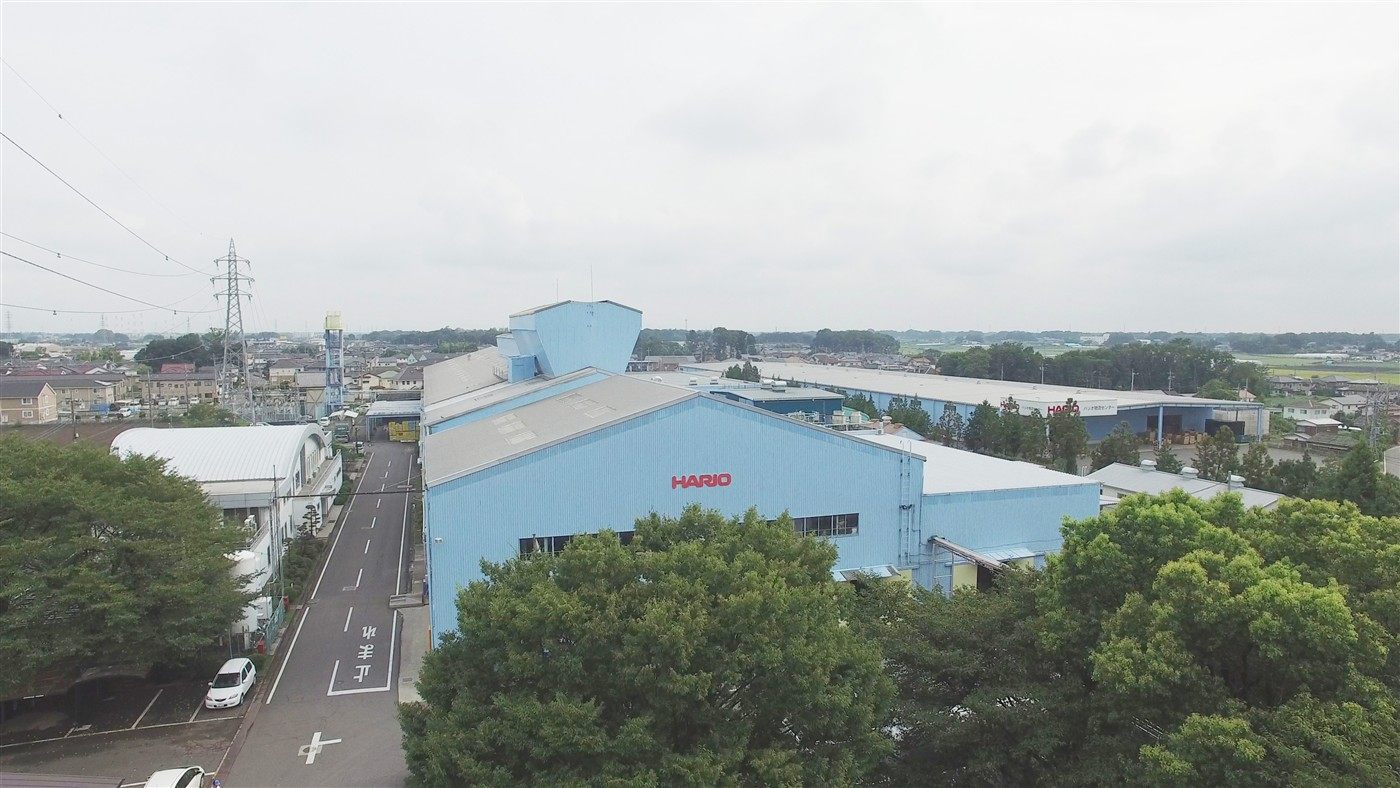
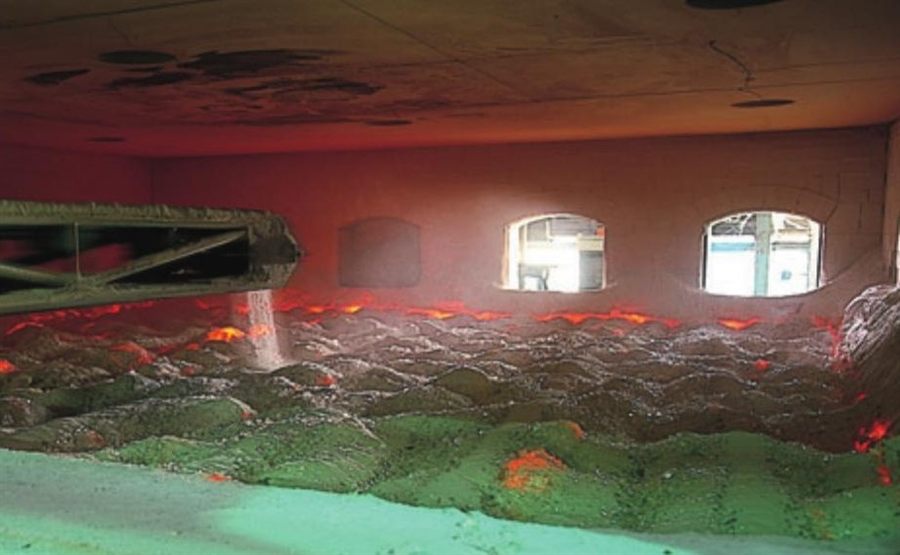
In 1972 the group developed a direct electric melting furnace. Electricity passes through the glass itself, so the glass is heated from the inside. Most furnaces burn fuel above the glass instead. Because nothing is burned, there is no exhaust gas — and so the plant needs no chimney.
The furnace won the Japan Invention Grand Prize in 1977, and an award from the Director-General of the Science and Technology Agency in 1982. More than fifty years later, this is still why the plant can stand next to farmland and houses without a chimney.
Glass that is cut off or rejected goes back into the furnace and is melted again. To remove bubbles from the glass we use only natural salt. We do not use arsenic or antimony.
Process
From sand to a finished graduation line
Every stage below happens at the Koga Plant.
For overseas customers
What we can do for a buyer outside Japan
We already ship to customers in Asia.
We can issue inspection certificates, SDS and shipping documents in English.
For filter tape, we can supply plain boxes or boxes with your own label. Tell us your destination, your annual volume and your label requirement.
ISO 9001
Quality management
Certified quality management system covering the production processes at the Koga Plant.
ISO 14001
Environmental management
The Koga Plant has been certified since 2001.
JIS
JIS marking approval
Approved since 1961 for chemical analysis glassware and glass tubing and rod under the Japanese Industrial Standards.
Tell us which documents your procurement or customs process requires, and we will confirm what we can issue.
History
A century of one material
HARIO SCIENCE CO., LTD. was established in 2004 to run the laboratory glass business. The glassmaking behind it started much earlier.
- 1921
Hiromu Shibata Works founded in Kanda-Sudacho, Tokyo. Manufacture and sale of laboratory glassware begins.
- 1949
After years of research, the melting of “HARIO glass” succeeds.
- 1955
The industry’s first tank furnace for hard first-grade glass is completed at the new plant.
- 1961
Approved as a JIS marking factory for chemical analysis glassware and glass tubing and rod.
- 1968
Hard first-grade H-32 glass is developed and enters mass production. Land is acquired at Morokawa, Koga-shi, Ibaraki for a new plant.
- 1971
The Koga Plant is completed.
- 1972
The direct electric melting furnace is developed in-house.
- 1977
The furnace receives the Japan Invention Grand Prize; in 1982, an award from the Director-General of the Science and Technology Agency.
- 1983
The world’s first computer-controlled high-mix, low-volume glass production line enters full operation at the Koga Plant.
- 2001
The Koga Plant is certified to ISO 14001.
- 2004
HARIO SCIENCE CO., LTD. is established.
- 2012
Group companies merge to form HARIO Co., Ltd.
- 2022
HARIO Glass® is registered as a trademark.
Profile
Company profile
| Name | HARIO SCIENCE CO., LTD. ハリオサイエンス株式会社 |
|---|---|
| Established | August 2004 |
| Representative | Tadayasu Shibata, Representative Director |
| Capital | JPY 60,000,000 |
| Address | 9-3 Nihonbashi-Tomizawacho, Chuo-ku, Tokyo 103-0006, Japan |
| Telephone | +81-3-6861-5602 |
| Fax | +81-3-6861-5603 |
| Group | HARIO Co., Ltd. (the HARIO group was founded in 1921) |
| Group plant | Koga Plant — 1371 Morokawa, Koga-shi, Ibaraki 306-0126, Japan |
| Business | Planning, manufacture and sale of laboratory glassware (beakers, flasks and related items), semi-finished blanks and glass tubing, glass fiber filter tape, and OEM products in borosilicate glass. |
| Material | H-32 borosilicate glass, thermal expansion α = 32 × 10−7/K |
| Certifications | ISO 9001, ISO 14001 (Koga Plant), JIS marking approval |
Start a conversation
Tell us what you need to source. We will reply with a clear answer on three points: whether we can make it, at what volume, and how long it takes.
9-3 Nihonbashi-Tomizawacho, Chuo-ku, Tokyo 103-0006, Japan
TEL +81-3-6861-5602 / FAX +81-3-6861-5603