
Semi-finished components
Start from a formed body, not from tube
If you make laboratory glassware, you probably start with tubing and form every shape yourself.
There is another way to start. A blank is a part-finished piece. The body is already formed to shape, cooled slowly to remove stress, and checked for size. So your work starts at the neck, the joint or the finish — not at the bottom of the flask.
The idea
Where your work begins
The finished article is the same. What changes is which forming steps you do yourself. Buying blanks removes the steps that are hardest to repeat the same way, and leaves you the steps where your own specification matters.
Route A
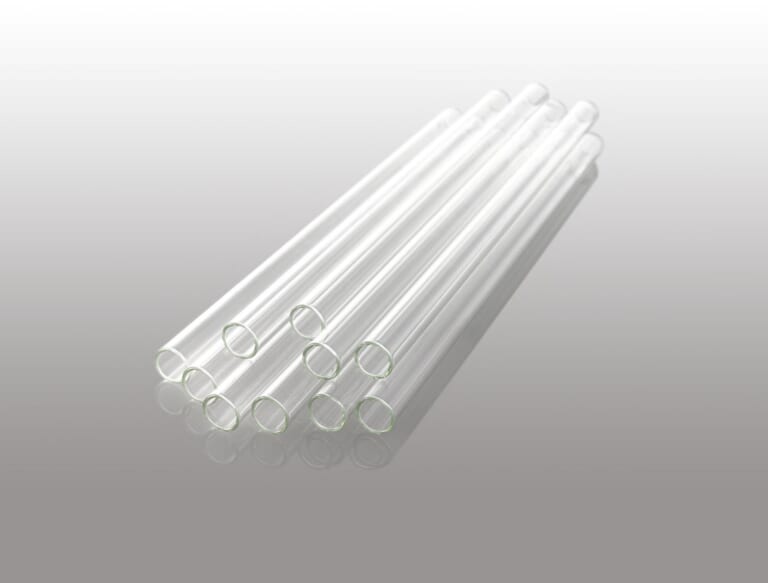
Starting from tubing
The usual approach in most workshops.
- Cut and clean the tube
- Form the base and the body
- Control wall thickness and roundness
- Anneal
- Form the neck, joint or thread
- Finish and inspect
Every body depends on the operator. You carry the cost of broken pieces and of differences in wall thickness.
Route B
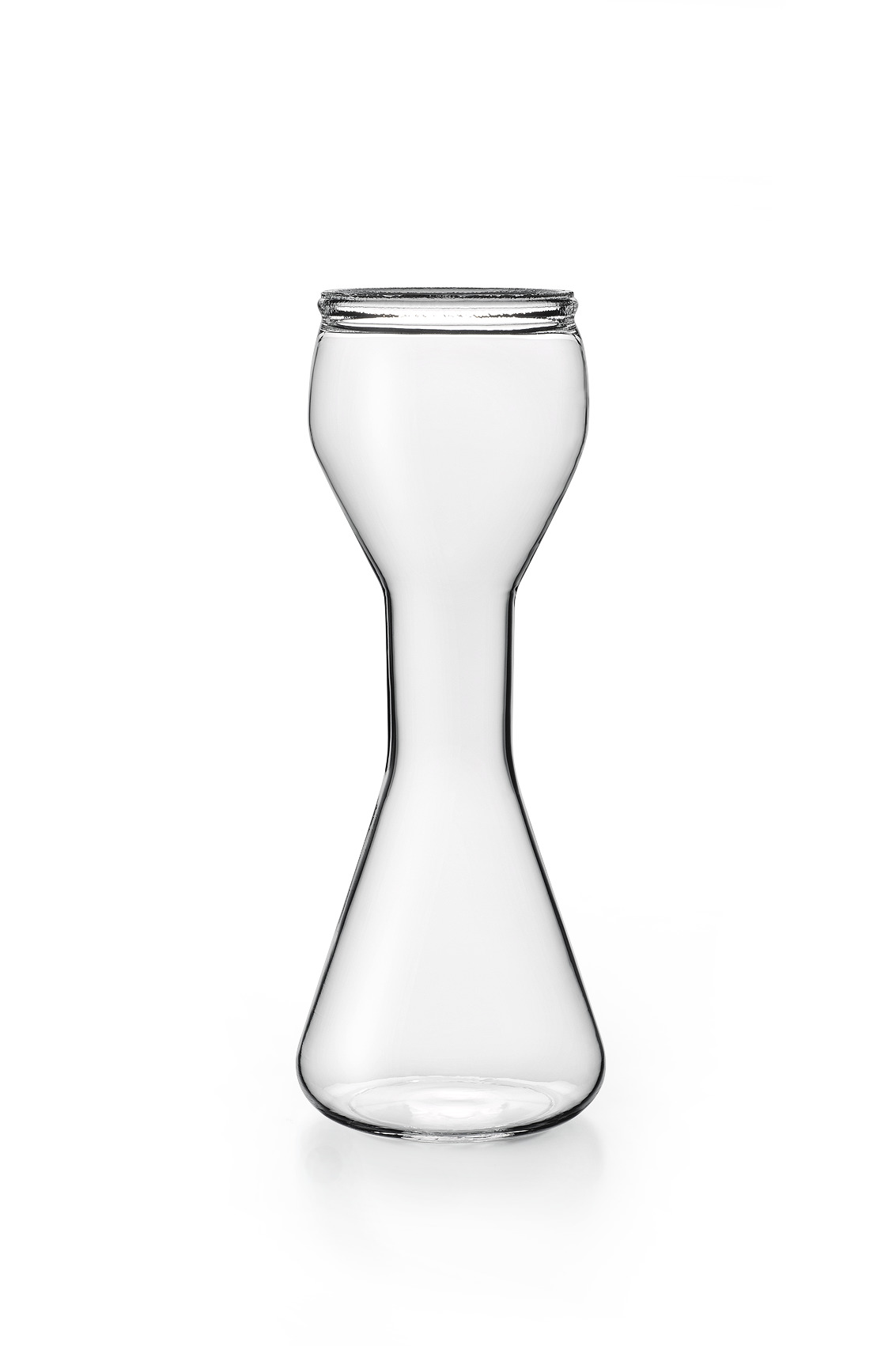
Starting from a blank
Steps 1–4 arrive already done.
- Cut and clean the tube
- Form the base and the body
- Control wall thickness and roundness
- Anneal
- Form the neck, joint or thread
- Finish and inspect
Your finishing work and your specification stay with you. Only the repeated forming work moves to us.
Why it is worth it
What you actually gain
01 / CONSISTENCY
The same shape, every lot
The body is formed from H‑32 borosilicate glass by machine blowing in a mould. So the capacity, the maximum diameter and the working height stay in the same range in every lot.
02 / SKILL
Less dependence on one person
It takes years to learn to form a round bottom by hand, the same way every time. Machine forming removes that. Your volume does not depend on who is working that day.
03 / MATERIAL
The same glass all the way through
The blank is H‑32 borosilicate glass (α = 32 × 10−7/K). It is the same glass we use for our finished labware.
Because the blank and the parts you join to it have the same composition, they expand and contract at the same rate. When you seal or join them later, there is no stress from a mismatch — so no distortion and no cracking.
Range
33 blank types
Grouped by availability. Capacities and dimensions vary by type — the full size tables, with neck diameter, maximum diameter, effective height and pieces per case, are on the Japanese page linked below. Tell us the type and capacity and we will quote in English.
| Blank | Japanese | Range | |
|---|---|---|---|
| Held in stock STOCK | |||
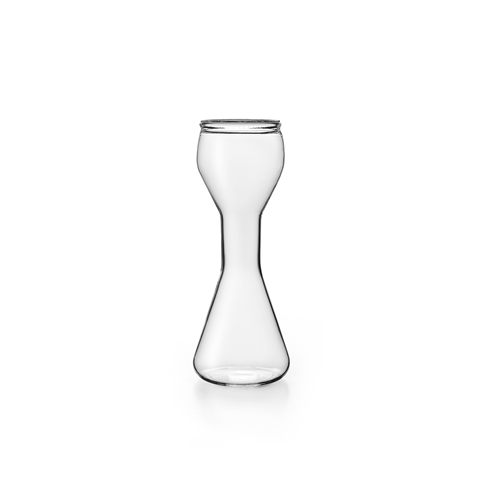 | Erlenmeyer flask body | 三角フラスコ | 50 – 3000 mL |
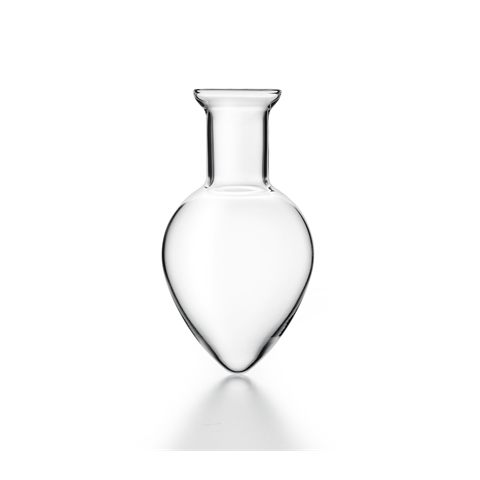 | Separatory funnel body (type N) | 分液ロート(N形) | 7 sizes |
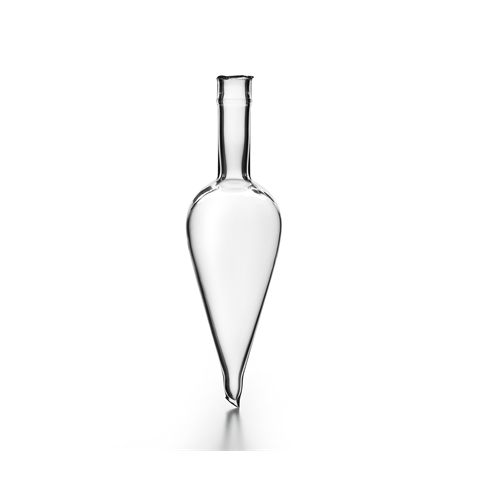 | Squibb separatory funnel body | スキーブ分液ロート | 8 sizes |
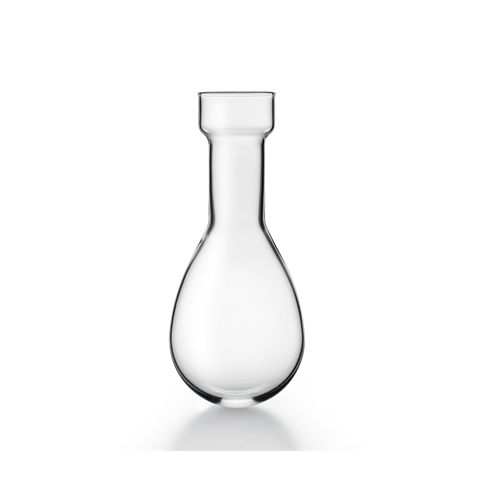 | Pear-shaped flask body (type N) | なすフラスコ(N形) | 8 sizes |
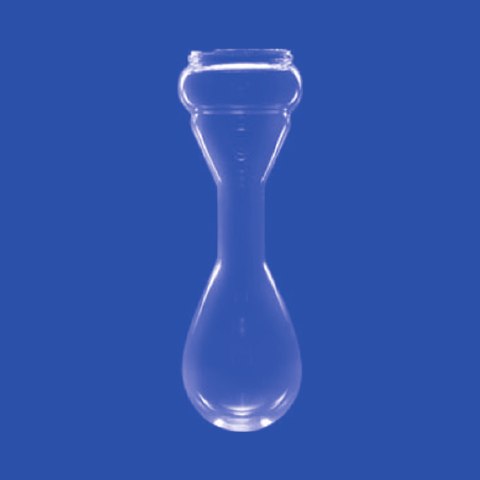 | Pear-shaped flask body | なすフラスコ | 4 sizes |
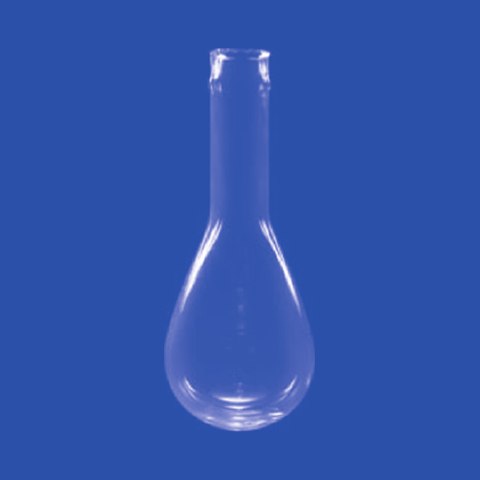 | Pear-shaped flask body, heavy wall | なすフラスコ(肉厚) | 8 sizes |
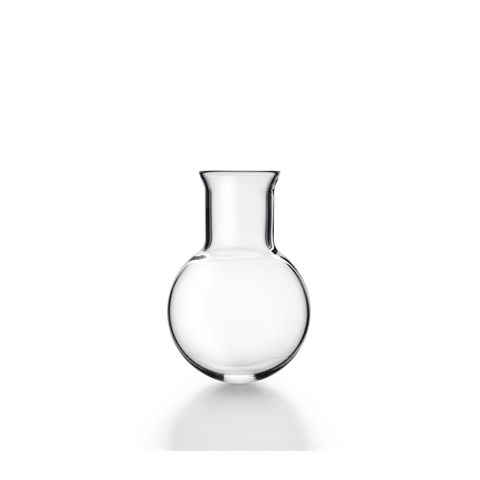 | Round-bottom flask body, wide neck | 丸底フラスコ(太首) | 4 sizes |
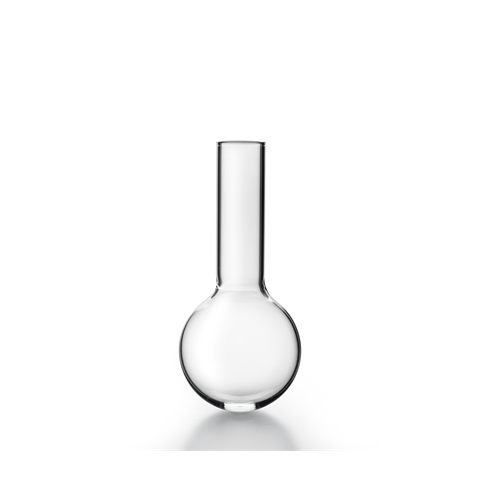 | Round-bottom flask body, narrow neck | 丸底フラスコ(細首) | 7 sizes |
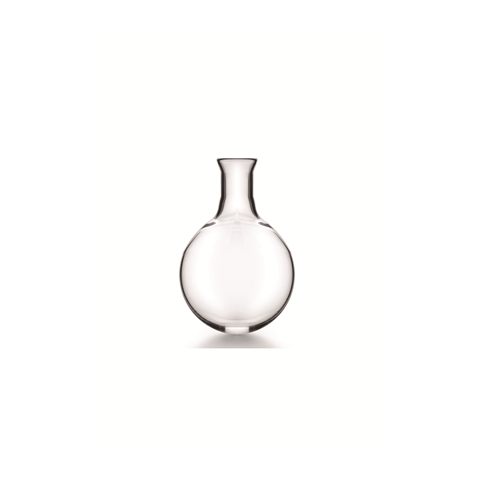 | Three-neck round-bottom flask body | 丸底フラスコ(三頭) | 9 sizes |
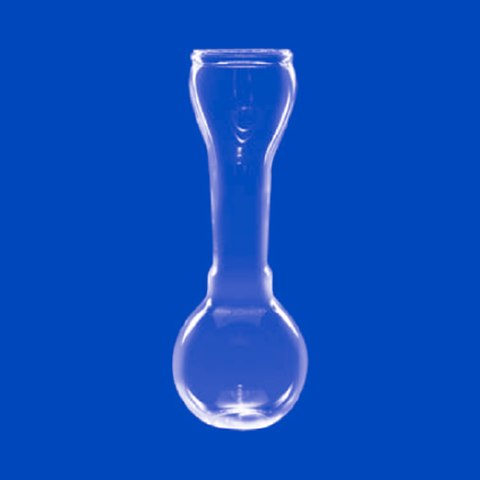 | Soxhlet extraction flask body | ソックスレフラスコ | 1 size |
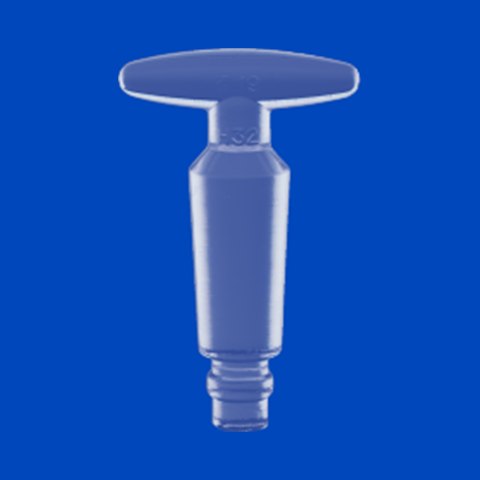 | Solid stopcock plug blank | ムク栓生地 | 8 sizes |
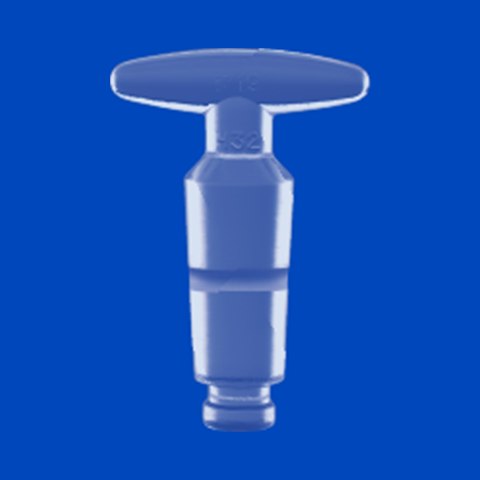 | Stopcock plug blank, bored (two-way) | ムク栓生地 穴空き | 3 sizes |
| Made to order | |||
 | Filtering (suction) flask body | 吸引瓶(ロカ瓶) | 3 sizes |
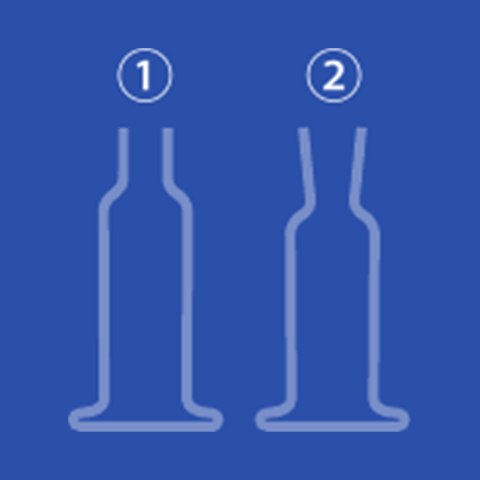 | Wash bottle body, footed & fire-polished | 洗浄瓶(台付・口焼品) | 3 sizes |
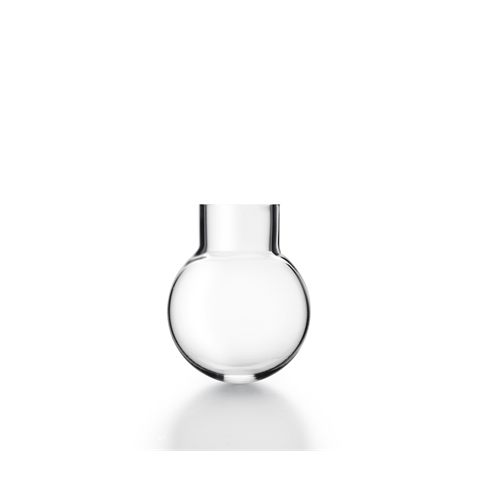 | Separable flask body Φ75 | 丸底セパフラスコ Φ75 | 4 sizes |
| Separable flask body Φ85 | 丸底セパフラスコ Φ85 | 5 sizes |
| Separable flask body Φ100 | 丸底セパフラスコ Φ100 | 3 sizes |
| Separable flask body Φ120 | 丸底セパフラスコ Φ120 | 3 sizes |
 | Three-neck round-bottom body, narrow neck | 丸底フラスコ(三頭・細首) | 1 size |
 | Separable flask cover | セパラブル用カバー | 4 sizes |
 | Separable flask cover, grooved (type N) | (N型)セパラブルカバー | 2 sizes |
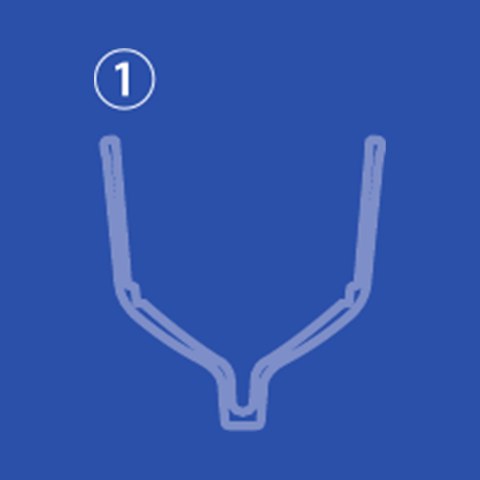 | Buchner funnel body | ロート(ブフナー用) | 2 sizes |
 | Grooved funnel body | ロート(溝付) | 4 sizes |
 | Flange | フランジ | 1 size |
| Custom order | |||
 | Round-bottom flask body | 丸底フラスコ | 4 sizes |
 | Erlenmeyer flask body with TS joint | 三角フラスコ(TS) | 5 sizes |
 | Pear-shaped flask body with TS joint | なすフラスコ(TS) | 3 sizes |
 | Separatory funnel body with TS joint | 分液ロート(TS) | 6 sizes |
 | Kjeldahl flask body, long neck | ケルダールフラスコ | 2 sizes |
 | Reagent bottle body | 保存瓶 | 4 sizes |
 | Ball-type glass stopper blank | 玉栓・カルシューム栓 | 5 sizes |
 | Stopper blank for narrow-mouth bottle | 細口瓶栓 | 3 sizes |
 | Distilling adapter blank | タコ足 | 2 sizes |
“TS” denotes a standard taper ground joint. Type N indicates our N-form profile. Blanks are supplied unfinished: necks, joints, threads, graduation and printing are yours to complete.
Ordering
How supply works
- Minimum order
- By the case. Pieces per case depend on the size — larger pieces come fewer to a case. We will confirm the exact case quantity for the types you are interested in.
- Export
- Available. We ship overseas and can issue English invoices, packing lists and the documentation your customs process requires.
- Freight
- Blanks are large and fragile, and they are not expensive for their size. This means the freight cost matters more than it does for small parts. Putting several types and sizes into one shipment usually decides whether the total cost works for you. Send us your full list and we will find the most efficient way to pack it.
- Lead time
- Stock types ship soonest. Made-to-order and custom types are produced against your order; we confirm the schedule when we quote.
- Beyond the list
- If the body you need is not here, it becomes a custom forming inquiry. Send a drawing or a description of the finished article and we will tell you whether it is feasible — see OEM & custom glass.
Tell us which shapes you make most often
The shapes you make again and again are the ones where blanks help most. Send us the shapes and capacities you use in a year. We will reply with the quantity per case, a quotation, and a realistic freight cost.